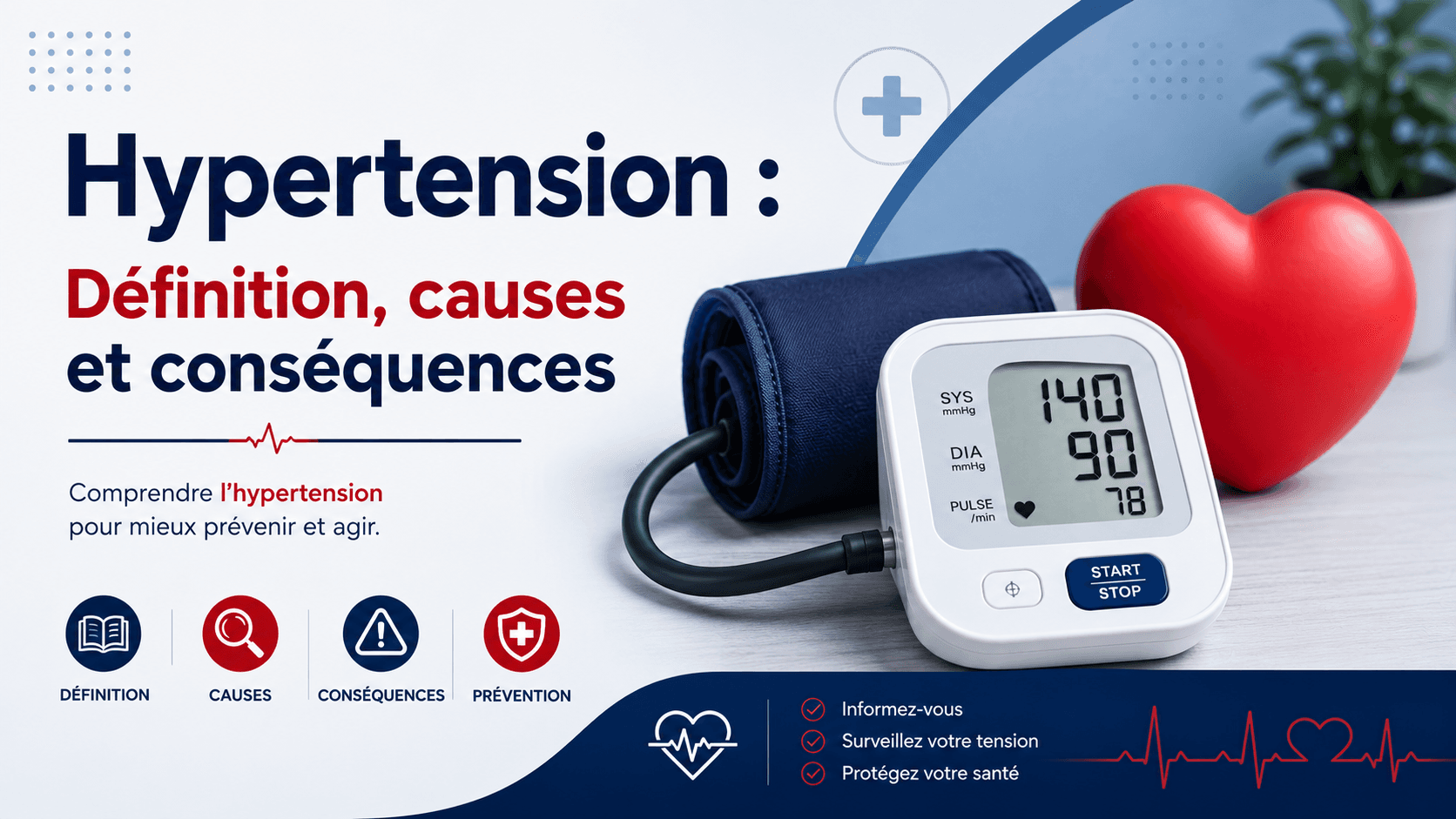
High blood pressure: Definition, causes and consequences
J
Judith Kalonji l Natutopathe l Nutrition fonctionnelle
July 9, 2026
High blood pressure: understanding this silent condition
High blood pressure affects hundreds of millions of people worldwide, often without them knowing. Nicknamed the "silent killer", it often progresses without visible symptoms, until it causes sometimes serious complications. Understanding what it is, where it comes from and what it can lead to is essential to better protect yourself from it.
1. What is high blood pressure?
The heart works like a pump: with each beat, it sends blood into the arteries to supply the whole body. This circulation exerts pressure on the artery walls, which is called blood pressure (or arterial tension).
This pressure is measured with two numbers:
The systolic pressure (the higher number): it corresponds to the pressure at the moment the heart contracts and pushes the blood.
The diastolic pressure (the lower number): it corresponds to the pressure when the heart relaxes between two beats.
We speak of high blood pressure when this pressure is persistently too high, generally above 140/90 mmHg, measured several times and under good conditions (at rest, away from exertion or stress).
It is not a one-off spike like the one you may have after a coffee or a strong emotion but a chronic elevation, established over time. It is precisely this lasting nature that makes high blood pressure dangerous: the arteries and organs are under excessive pressure permanently, day after day, often without the person feeling anything.
We generally distinguish:
Mild hypertension (140-159 / 90-99 mmHg)
Moderate hypertension (160-179 / 100-109 mmHg)
Severe hypertension (180 mmHg and above / 110 mmHg and above)
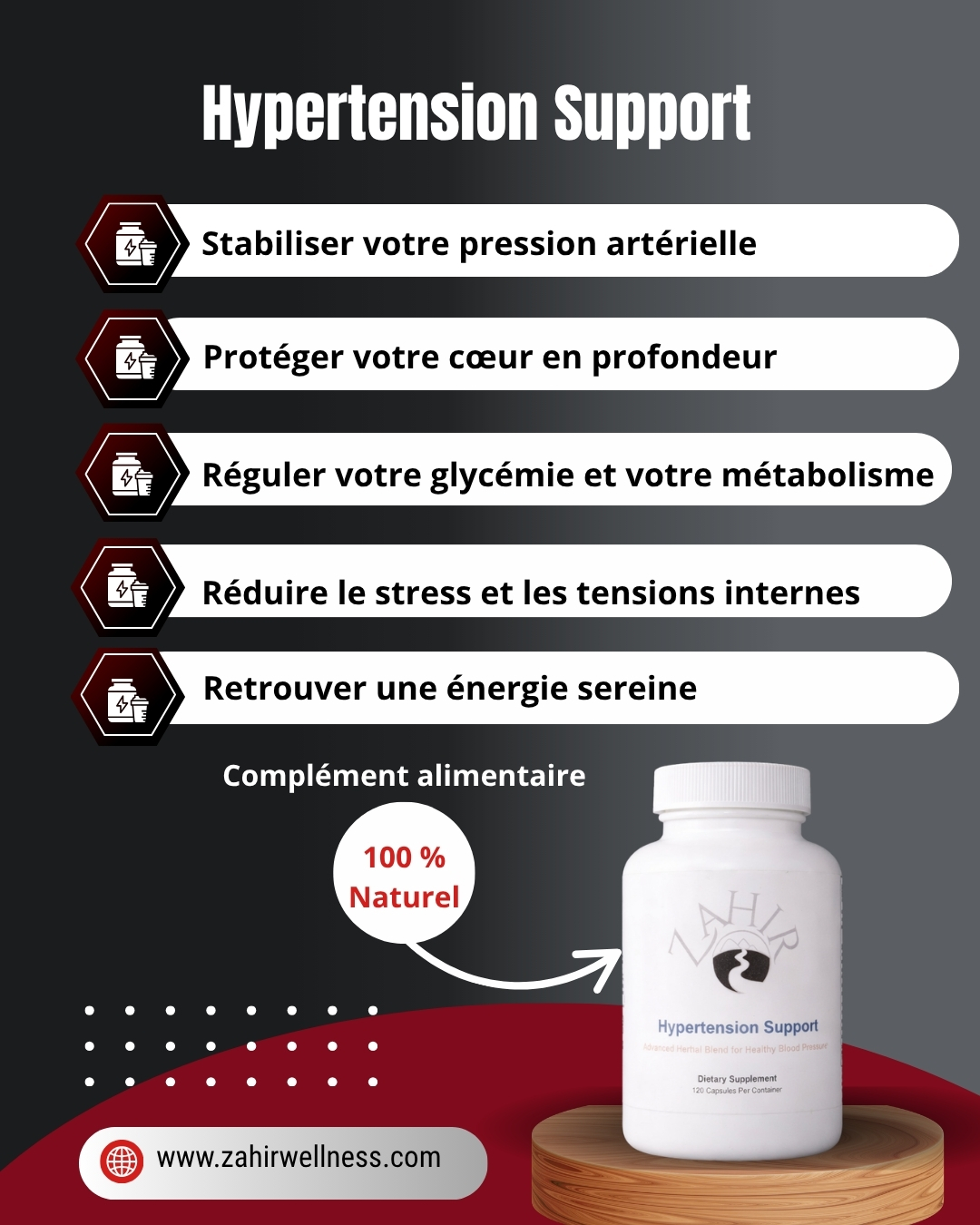
Click on the link below to discover our 100% natural solution against hypertension: https://www.zahirwellness.com/produit/hypertension-support
2. What are the causes of high blood pressure?
In the vast majority of cases (about 90%), no single and precise cause is found: this is then called essential or primary hypertension. It actually results from a combination of several factors that, together, make blood pressure rise.
a- Factors that cannot be changed
- Age : arteries naturally lose elasticity over time, which increases pressure.
- Heredity : having a parent with hypertension increases the risk of developing it yourself.
- Ethnic origin : some populations have a statistically higher risk.
b- Lifestyle-related factors
- A diet too high in salt : salt promotes water retention, which increases blood volume and therefore pressure.
- A sedentary lifestyle : lack of physical activity weakens the heart and blood vessels.
- Overweight and obesity : excess weight forces the heart to work harder.
- Excessive alcohol consumption : it acts directly on blood vessels.
- Tobacco : it damages artery walls and makes them stiffer.
- Chronic stress : it keeps the body in a permanent state of alert, which can raise blood pressure over time.
- Lack of sleep : poor-quality sleep disrupts the natural regulation of blood pressure.
c-Secondary causes (rarer)
In about 10% of cases, hypertension is due to a precise and identifiable cause, such as:
- kidney disease;
- a hormonal imbalance (for example in the thyroid or adrenal glands);
- certain medications (anti-inflammatories, oral contraceptives, etc.);
- a malformation or narrowing of a blood vessel.
Click on the link below to discover our 100% natural solution against hypertension: https://www.zahirwellness.com/produit/hypertension-support
3. What are the consequences of high blood pressure?
This is where the real danger of hypertension lies: when it is not detected or not treated, it acts silently, but its effects on the body can be severe and sometimes irreversible.
- On the heart
The heart must make a constant effort to push blood against too high a pressure. Over time, it can thicken and weaken, which can lead to heart failure. Hypertension also greatly increases the risk of myocardial infarction (heart attack).
- On the brain
Too much pressure can weaken or block the small vessels in the brain, increasing the risk of stroke, whether caused by hemorrhage or a clot. Chronic hypertension is also associated with an increased risk of memory disorders and vascular dementia with age.
- On the kidneys
The kidneys filter blood through small vessels that are very sensitive to pressure. Prolonged hypertension can gradually damage them, leading to kidney failure, sometimes to the point of requiring dialysis.
- On the eyes
The retina also contains small, fragile vessels. Too high a pressure can damage them and cause hypertensive retinopathy, which can affect vision.
- On the arteries in general
Hypertension accelerates the aging of the arteries and promotes atherosclerosis (fat deposits on the artery walls), which increases the risk of complications throughout the body, including in the legs (arteritis).
Click on the link below to discover our 100% natural solution against hypertension: https://www.zahirwellness.com/produit/hypertension-support
Comments
Loading…
Newsletter
Receive our wellness advice every week
Join more than 5,000 women reading our advice on hormonal health, natural supplements and everyday wellbeing.
No spam. Unsubscribe in one click.