Iron deficiency anemia: symptoms, causes
J
Judith KALONJI I Naturopathe I Nutrition fonctionnelle
Iron deficiency anemia, in other words anemia caused by a lack of iron, affects millions of people worldwide, and yet often remains poorly diagnosed for months, or even years. This article explains what is really happening in your body, why you feel these so characteristic symptoms, and what you can concretely do to feel better.

What exactly is iron deficiency anemia?
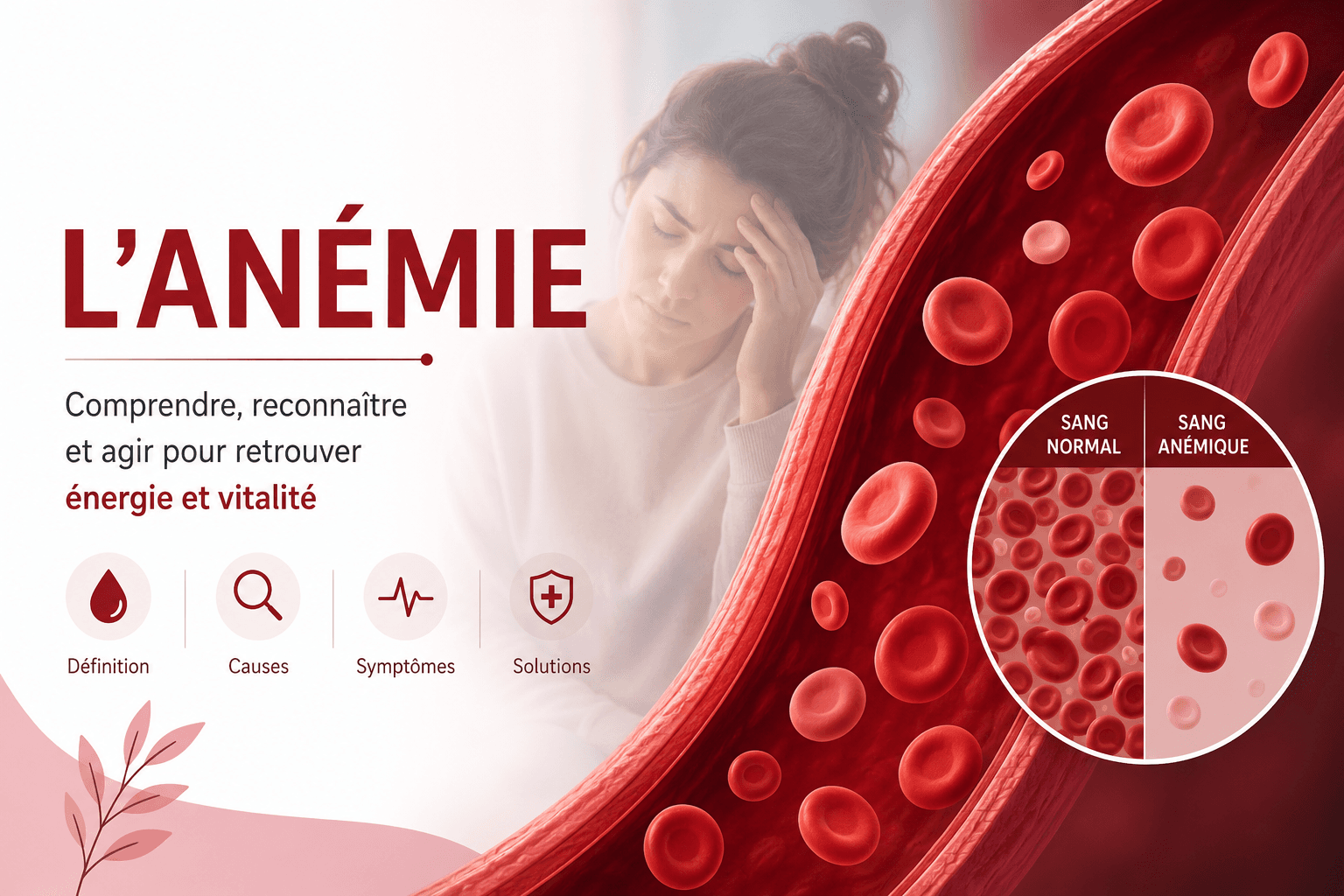
Iron deficiency anemia is simply anemia caused by a lack of iron. Iron is essential for producing hemoglobin, the protein in your red blood cells that carries oxygen to all your organs. When iron stores run out, your blood becomes less efficient: it can no longer bring enough oxygen where your body needs it.
Anemia is diagnosed when the hemoglobin level falls below a certain threshold: below 12 g/dL in women and 13 g/dL in men. But symptoms can appear well before reaching these numbers, as soon as your iron stores (measured by ferritin) begin to drop.
The symptoms of anemia: what patients really feel
If you typed "I am always tired for no reason" or "why do I have heavy legs and shortness of breath" into a search engine, you are probably in the right place. Here are the signs most frequently reported by people suffering from a lack of iron:
Crushing fatigue, even after a good night's sleep
This is by far the number one complaint. A fatigue that does not go away, that sets in first thing in the morning, that makes you want to go back to sleep when you have just gotten up. This is not laziness, it is your body lacking oxygen at the cellular level. Your muscles and your brain are literally running in slow motion.
Shortness of breath on exertion and palpitations
Climbing a flight of stairs becomes an effort. Walking fast causes unusual shortness of breath. Some patients also report palpitations, a heart that races even though they have done nothing particular. The heart compensates for the lack of oxygen by beating faster, an adaptation mechanism that eventually wears out.
Pallor, discolored lips and pronounced dark circles
Do you look tired even when you sleep well? Look at the inside of your lower eyelids: if the mucous membrane is pale pink rather than a clear red, it is a classic sign of anemia. The skin takes on a grayish tint, the lips lose their color, and the dark circles appear sunken.
Headaches, dizziness and difficulty concentrating
The brain is one of the organs most hungry for oxygen. When the supply decreases, the consequences are not long in coming: frequent headaches, difficulty concentrating, a feeling of mental fog (the famous "brain fog"), dizziness when standing up too quickly. Some patients describe a feeling of no longer really being there, a lack of mental clarity that complicates daily life.
Hair loss and brittle nails
Hair loss linked to a lack of iron is often overlooked or attributed to stress. Yet the hair follicle is very sensitive to iron deficiencies. If your hair falls out in abnormal amounts, if your nails become ridged, brittle or take on a hollow shape (spoon-shaped, what is called koilonychia), it is a signal not to be ignored.
Restless legs syndrome
Less well known but very debilitating: restless legs syndrome. Unpleasant sensations in the legs in the evening, an irresistible urge to move them to relieve the discomfort. This sleep disorder is closely linked to iron deficiencies and often disappears with appropriate supplementation.
Why do we lack iron? The most common causes
A lack of iron always results from an imbalance between intake and losses. Several mechanisms may be involved, sometimes simultaneously:
Heavy periods in women
This is the leading cause of iron deficiency anemia in women of childbearing age. Long, heavy or painful periods (sometimes associated with fibroids or endometriosis) cause regular blood loss that diet cannot always compensate for. Many women live for years with a very low ferritin level without anyone offering them testing.
A diet low in iron or poor absorption
The human body does not easily absorb iron, and especially not from all sources. Heme iron (found in red meat, liver, seafood) is much better assimilated than the non-heme iron in legumes, spinach or cereals. People who are vegetarian or vegan are therefore particularly at risk. Added to this is the role of certain foods that block absorption: tea, coffee, excess calcium, or foods rich in phytates.
Pregnancy and breastfeeding
Iron requirements increase considerably during pregnancy — the baby draws on its mother's stores to make its own red blood cells. Supplementation is often recommended from the second trimester, but it is not systematic everywhere, which exposes many women to postpartum anemia.
Digestive bleeding
In men and in women after menopause, iron deficiency anemia without an obvious explanation should always prompt a search for digestive bleeding: ulcer, hiatal hernia, polyp, or in some cases colorectal cancer. This is why unexplained anemia in an adult over 50 justifies additional tests.
Inflammatory bowel diseases and absorption problems
Crohn's disease, ulcerative colitis, celiac disease or severe irritable bowel syndrome can considerably reduce the intestine's ability to absorb iron, even if the diet is correct. In these cases, oral supplementation is sometimes not enough, and an iron infusion may be considered.
How do you know if you are anemic? The blood test to ask for
A simple blood test is enough to confirm the diagnosis. The key tests to have are:
• The CBC (Complete Blood Count): measures the hemoglobin level, the number of red blood cells and their size (red blood cells are small and pale in cases of iron deficiency).
• Serum ferritin: this is the most important marker for assessing iron stores. A level below 30 µg/L is considered low, even if hemoglobin is still normal.
• Serum iron and transferrin: these help assess the transport of iron in the blood.
Warning: a doctor who only measures hemoglobin may miss a latent iron deficiency, also called "iron deficiency without anemia." Yet this deficiency can already cause significant symptoms, notably fatigue and hair loss.
iron deficiency anemia is not inevitable
Anemia caused by a lack of iron is one of the most widespread nutritional diseases in the world, but also one of the most easily treated when it is correctly identified. Chronic fatigue, shortness of breath, hair loss, palpitations — all of this can have a simple explanation and a concrete solution.
A blood test, an appropriate treatment, a few dietary adjustments, and most patients regain normal energy within a few weeks to a few months. The key is not to let resignation set in — and to put a name to what your body has been trying to tell you for too long.
Comments
Loading…
Newsletter
Receive our wellness advice every week
Join more than 5,000 women reading our advice on hormonal health, natural supplements and everyday wellbeing.
No spam. Unsubscribe in one click.